Hounslow Set for Maximum Tax Increase Despite Fair Funding Boost
Borough balances the books in 'turning point' budget
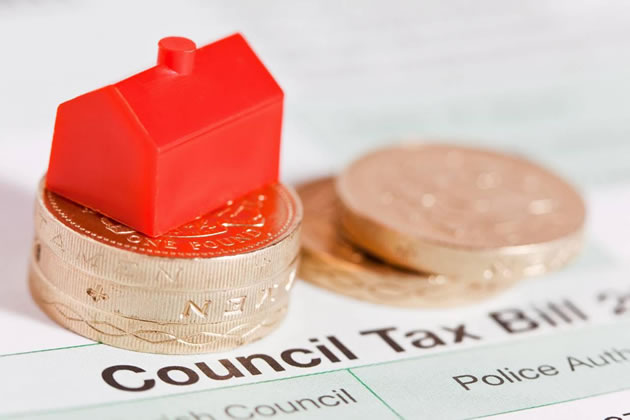
Annual bills for residents are likely to increase by 4.99%. Picture: Hounslow Council
February 5, 2026
Hounslow Council has published its draft Budget for 2026/27, setting out how it plans to balance rising demand for services with long-term financial sustainability after more than a decade of austerity, inflationary shocks and growing social need.
The report, which will be considered by Cabinet on 10 February before final approval by Borough Council in March, describes the coming year as a “turning point” for the authority, following major changes to how local government funding is allocated nationally .
Just seven months ago, the council identified a projected budget gap of £54.4 million for 2026/27. Since then, a combination of new government funding, savings proposals and council tax increases has enabled Hounslow to set a balanced budget for the coming year .
The council has identified £26.1 million of savings and efficiencies for 2026/27, following a borough-wide review of service spending, alongside a £21.3 million improvement in funding resulting from the government’s Fair Funding Review 2.0. These measures, together with the use of contingencies and reserves, close the remaining gap.
The budget proposes a 4.99% increase in the council’s element of council tax for 2026/27. This is the maximum increase permitted without a local referendum and is split between a 2% adult social care precept and a 2.99% general increase to support wider council services.
For a Band D property, this will bring Hounslow’s council tax to £1,675.05 per year. Despite the rise, Hounslow’s council tax remains below the Outer London average .
Council tax is expected to account for around half of the council’s core funding by 2028/29, reflecting a long-term shift away from central government grant towards locally raised income.
A central feature of the budget is the impact of the government’s Fair Funding Review 2.0, the first major redistribution of local government funding since 2013/14. The review aims to better align funding with deprivation and need, areas where Hounslow has historically been under-funded .
Under provisional figures, Hounslow’s Core Spending Power is set to rise by 37.2% by 2028/29 compared with 2025/26 levels—well above the London average. The non-council tax element of funding is projected to increase by more than 50% over the same period, reflecting higher assessed need in the borough .
However, the report notes that even with these increases, funding per resident remains around £50 below pre-austerity levels once population growth is taken into account.
Despite the improved funding outlook, the council warns that financial pressures remain acute. Adult social care accounts for around half of council spending, with more than 7,000 requests for support each year. Children’s services also remain under strain, with around 400 looked-after children requiring ongoing care .
Inflation continues to pose a significant risk. The council estimates that every 1% increase in inflation adds around £4 million to its annual costs. Although inflation has fallen from its 2022 peak, it remains above the Bank of England’s target, creating ongoing uncertainty for budget planning .
Temporary accommodation and waste and recycling costs are identified as particular pressure points in the current year, contributing to a forecast £6.8 million overspend in 2025/26, partially offset by treasury management underspends and contingencies.
The report places strong emphasis on the council’s reserves strategy. Reserves were heavily drawn upon during the inflation spike of recent years, and rebuilding them is described as a priority to protect against future shocks .
The council’s Chief Finance Officer confirms that reserves are adequate to support the 2026/27 budget, but warns that they cannot be relied upon indefinitely to plug structural gaps. Their use will be tightly controlled and aligned with the council’s medium-term financial strategy.
Alongside the day-to-day revenue budget, the council has set out an ambitious capital programme running to 2029/30 and beyond. Planned investment includes housing estate improvements, new social housing delivery, parks and open spaces, transport infrastructure and town centre regeneration .
More than £125 million is earmarked through the Housing Revenue Account to deliver new council homes, while £32 million will be spent on improving existing estates in 2026/27 alone. The council is also continuing to support major strategic projects such as the West London Orbital rail scheme and regeneration along the Golden Mile.
The council describes the 2026/27 budget as one that balances “responsibility with ambition”. While acknowledging the relief provided by fairer funding, the report stresses that rising demand, economic uncertainty and long-term pressures on social care mean difficult decisions are likely to continue in future years.
Responding to the budget, Cllr Peter Thompson, leader of the Conservative group on Hounslow Council, said: “Labour’s budget plan will see residents facing council tax rises of over 15 per cent over the next three years, as well as millions in planned additional fines. In return, they can expect worse services.
“We’re glad that, at least in part, the Labour administration has listened to us and reduced the subsidy to Lampton, and that they are finally renting out the empty space at Hounslow House to generate revenue. If they’d accepted these Conservative proposals years ago, we may have been in a stronger financial position today.
“Instead, Labour has confirmed cuts to frontline housing services at a time of record waiting lists and ongoing problems with estate maintenance. Inconceivably, they will also be cutting the domestic violence team, a critical service that protects vulnerable people in our borough. This is not a sustainable way to run our borough.”
Like Reading Articles Like This? Help Us Produce More This site remains committed to providing local community news and public interest journalism. Articles such as the one above are integral to what we do. We aim to feature as much as possible on local societies, charities based in the area, fundraising efforts by residents, community-based initiatives and even helping people find missing pets. We've always done that and won't be changing, in fact we'd like to do more. However, the readership that these stories generates is often below that needed to cover the cost of producing them. Our financial resources are limited and the local media environment is intensely competitive so there is a constraint on what we can do. We are therefore asking our readers to consider offering financial support to these efforts. Any money given will help support community and public interest news and the expansion of our coverage in this area. A suggested monthly payment is £8 but we would be grateful for any amount for instance if you think this site offers the equivalent value of a subscription to a daily printed newspaper you may wish to consider £20 per month. If neither of these amounts is suitable for you then contact info@neighbournet.com and we can set up an alternative. All payments are made through a secure web site. One-off donations are also appreciated. Choose The Amount You Wish To Contribute. If you do support us in this way we'd be interested to hear what kind of articles you would like to see more of on the site – send your suggestions to the editor. For businesses we offer the chance to be a corporate sponsor of community content on the site. For £30 plus VAT per month you will be the designated sponsor of at least one article a month with your logo appearing if supplied. If there is a specific community group or initiative you'd like to support we can make sure your sponsorship is featured on related content for a one off payment of £50 plus VAT. All payments are made through a secure web site. |