Ealing Council Holding Workshop on The London Plan
Wants residents' views on the development over next two decades
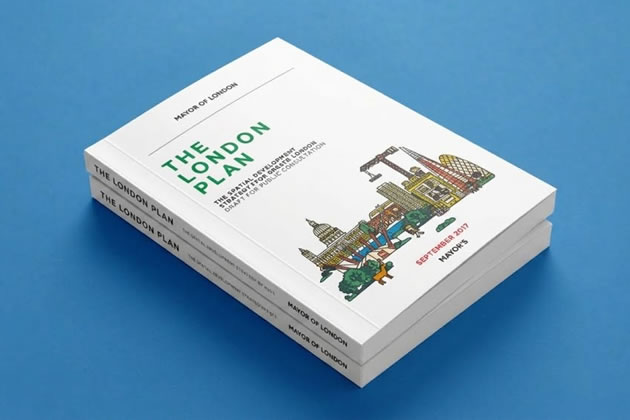
The London Plan set the borough the second highest target for housing
September 2, 2026
Ealing residents are being invited to take part in a special workshop to share their views on shaping the future of the borough.
The London Plan, from the Mayor of London, sets out how the capital will grow and develop over the next 20 years covering issues including housing, jobs, transport, infrastructure, design, and the protection of green spaces and is a key part of the planning framework used by local authorities.
To shape the council’s response to proposed changes, it is hosting a workshop on Tuesday 15 September, in Perceval House, Ealing, from 6pm-8pm to give residents the opportunity to share their views.
The draft London Plan proposes significant changes that could influence how the borough might develop over the next two decades, making resident’s feedback particularly important. The plan sets housing targets for each borough and includes policies on where new development should be built, how densely areas can be developed, and the design and scale of buildings, including taller buildings.
The draft London Plan sets a ten-year housing target for Ealing of 32,054 new units for the period 2027/28 to 2036/37. This is one of the highest in London, second only to Barnet.
The number is a minimum, not a cap. Boroughs are expected to plan for higher numbers where viability allows, and the Mayor notes that London’s overall housing need is far higher than the capacity-based targets in the Plan.
The target is derived from the Strategic Housing Land Availability Assessment (SHLAA), which estimates how much housing can realistically be delivered on available land. It is not based on the higher housing-need figure in the Strategic Housing Market Assessment (SHMA).
The London-wide target is 558,451 homes over ten years, meaning Ealing is expected to deliver roughly 5.7% of all new homes in London during that period.
Unlike some boroughs, Ealing’s target does not include a Green Belt component, meaning all 32,054 homes are expected to come from brownfield or previously developed land.
The workshop will include an introductory presentation explaining the London Plan and what it means for the borough, followed by facilitated group discussions where participants will explore key topics and share their views. The feedback gathered during the event will inform Ealing Council’s response to the consultation. To attend the workshop email Steve Barton, strategic planning manager at BartonS@ealing.gov.uk
Responses can also be submitted by completing the surveys on the Mayor of London website, which closes on 15 October.
The proposals could affect where new homes are built, including affordable homes, how tall new buildings can be, and how open spaces are protected. The plan also includes changes to employment areas and investment in transport and infrastructure.
Councillor Monica Hamidi, the council’s cabinet member for good growth, said: “The London Plan will play a major role in shaping how our borough develops in the years ahead, influencing everything from new homes and jobs to transport, infrastructure, and green spaces.
“This workshop is a valuable opportunity for residents to learn more about the proposals and tell us what matters most to them. I would encourage everyone with an interest in the future of our borough to get involved and make their voice heard.”
The London Plan is a blueprint for development and growth in London. It sets the spatial strategy for London and includes policies related to housing; environment; economic development; infrastructure, and design.
It is a legal requirement for the Mayor to prepare, publish and keep under review the Spatial Development Strategy for Greater London (the London Plan). It sets out the framework for how London will develop over the next 20 years. This new London Plan will look forward to 2046/7.
Like Reading Articles Like This? Help Us Produce More This site remains committed to providing local community news and public interest journalism. Articles such as the one above are integral to what we do. We aim to feature as much as possible on local societies, charities based in the area, fundraising efforts by residents, community-based initiatives and even helping people find missing pets. We've always done that and won't be changing, in fact we'd like to do more. However, the readership that these stories generates is often below that needed to cover the cost of producing them. Our financial resources are limited and the local media environment is intensely competitive so there is a constraint on what we can do. We are therefore asking our readers to consider offering financial support to these efforts. Any money given will help support community and public interest news and the expansion of our coverage in this area. A suggested monthly payment is £8 but we would be grateful for any amount for instance if you think this site offers the equivalent value of a subscription to a daily printed newspaper you may wish to consider £20 per month. If neither of these amounts is suitable for you then contact info@neighbournet.com and we can set up an alternative. All payments are made through a secure web site. One-off donations are also appreciated. Choose The Amount You Wish To Contribute. If you do support us in this way we'd be interested to hear what kind of articles you would like to see more of on the site – send your suggestions to the editor. For businesses we offer the chance to be a corporate sponsor of community content on the site. For £30 plus VAT per month you will be the designated sponsor of at least one article a month with your logo appearing if supplied. If there is a specific community group or initiative you'd like to support we can make sure your sponsorship is featured on related content for a one off payment of £50 plus VAT. All payments are made through a secure web site. |